
Designing an MMA training area takes careful planning because mixed martial arts combines several types of movement in one space. Athletes may be striking, grappling, practicing takedowns, working in the clinch, or training on the ground during the same session.
Because of this, the facility needs more than basic mats and a few heavy bags. Flooring, wall protection, cage placement, equipment storage, and open movement space all affect how safely and efficiently the gym operates each day. A well-planned layout also helps coaches manage classes without unnecessary crowding.
Start With a Clear Floor Plan
Before purchasing major equipment, measure the usable training space carefully. The total size of the building may include reception areas, bathrooms, offices, storage rooms, columns, and other fixed features that cannot be used for training.
Dividing the available floor into clear zones can make the facility easier to manage. One section may be dedicated to grappling, another to striking, and another to cage work or conditioning.
Walkways should remain open so members can move between training areas without crossing directly through active drills.
Choose Flooring for Mixed Martial Arts
MMA flooring needs to support both stand-up movement and ground work. Athletes require enough stability for striking and footwork, but the surface should also provide suitable cushioning for takedowns and controlled falls.
A floor that is too soft can move feel unstable, while one that is too hard may be uncomfortable during grappling sessions. The right balance depends on the type of classes offered and how frequently the area is used.
Cleaning should also be considered because athletes often train barefoot and spend significant time in direct contact with the surface.
Protect High-Contact Wall Areas
Walls near grappling sections can become part of the training environment during clinch drills, takedown defense, and pressure work. Hard structural surfaces may not be suitable where athletes regularly make contact with them.
Installing gym wall padding for MMA can help make these areas more appropriate for regular training. Padding is especially useful around mat zones where athletes frequently work close to walls.
The height and position of the padding should reflect how the space is actually used rather than simply covering sections for appearance.
Leave Space Between Active Zones
Crowding can create problems even in a well-equipped gym. Heavy bags may swing into nearby walkways, grappling pairs can move beyond their assigned space, and strength equipment may interfere with warm-up areas.
Allowing reasonable separation between different training zones gives athletes more room to move and makes it easier for coaches to observe sessions.
Owners should also avoid placing benches, storage boxes, or loose equipment in areas where athletes may step backward or move unexpectedly.
Position the Cage Carefully
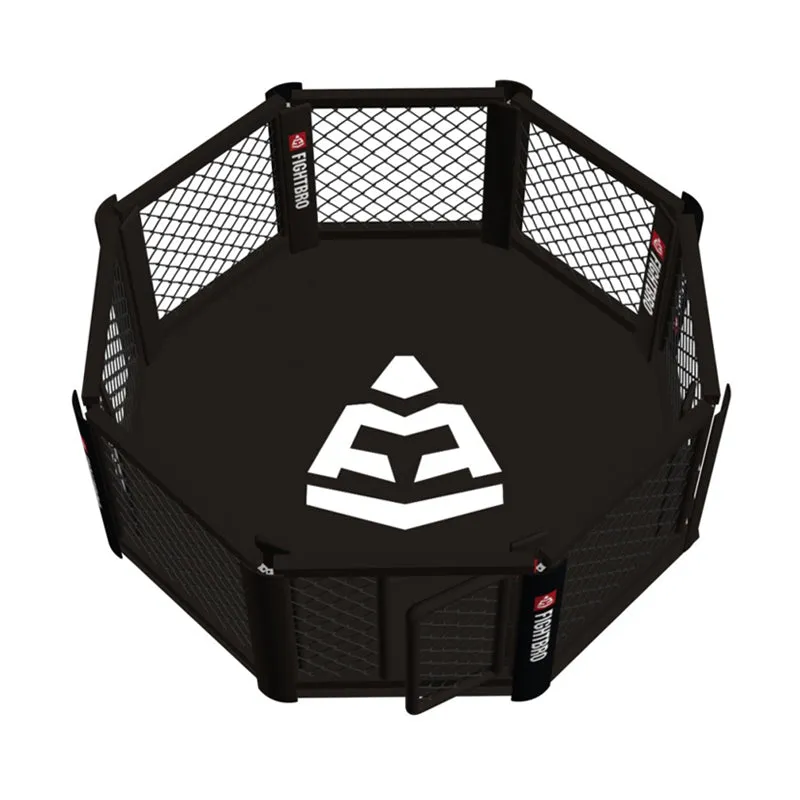
For gyms that focus on competition training, an MMA Cage can provide a valuable environment for fence work, clinching, takedown defense, escapes, and controlled sparring.
However, the cage should not be placed simply where there happens to be an empty corner. Owners need to consider the full external footprint, the position of the doors, and the clearance required around the outside.
A cage that is too large for the available room can reduce space for mats, bags, and other useful training areas.
Keep the Cage Perimeter Clear
The space outside the cage needs to remain organized. Coaches may need to move around the perimeter, and athletes should have a clear route to the entrance during training.
Loose gloves, pads, water bottles, or cleaning equipment should not be stored directly against cage panels or doors. These items can create clutter and make movement more difficult.
The surrounding floor should also remain easy to clean and inspect.
Organize Equipment Storage
MMA gyms use many small training items, including gloves, pads, kick shields, headgear, resistance tools, and cleaning supplies. Without dedicated storage, these products can quickly spread across the training floor.
Racks, shelves, and designated equipment areas can keep walkways clear while still giving coaches quick access to frequently used gear.
A clean storage system also makes it easier to identify damaged or missing equipment before classes begin.
Plan for Cleaning and Maintenance
Regular cleaning should be part of the gym layout from the beginning. Staff need access to mat edges, corners, wall padding, cage surfaces, and areas behind fixed equipment.
If structures are installed too close together, some sections may become difficult to clean properly. Leaving practical access around major equipment can make routine maintenance much easier.
Mats, padding, cage panels, and other frequently touched surfaces should also be inspected regularly for wear or damage.
Consider Future Changes
A gym may begin with a small membership but expand over time. Class sizes can increase, new disciplines may be introduced, or more equipment may be added.
Designing the training area with some flexibility can prevent major changes later. Open zones can be adapted for different classes, while storage and equipment placement can be adjusted as the gym grows.
Planning for future use is often easier than rebuilding a crowded layout after the facility becomes busy.
Conclusion
A safer MMA training area depends on how well flooring, wall protection, cage placement, storage, and open space work together. Each element should support the movements athletes perform during real training sessions.
By planning the facility before installation and maintaining clear, organized training zones, gym owners can create a practical environment that supports everyday classes, coaching, competition preparation, and long-term use.